Performance Core

Background Process Control Real-Time Priority Balance

Inactive services and lingering background daemons steadily siphon computing power away from critical active workflows. Our specialized module analyzes thread activities continuously, suspends redundant tasks safely, and redirects processing power directly to your active applications.

Real-Time Engine
Automated Balance

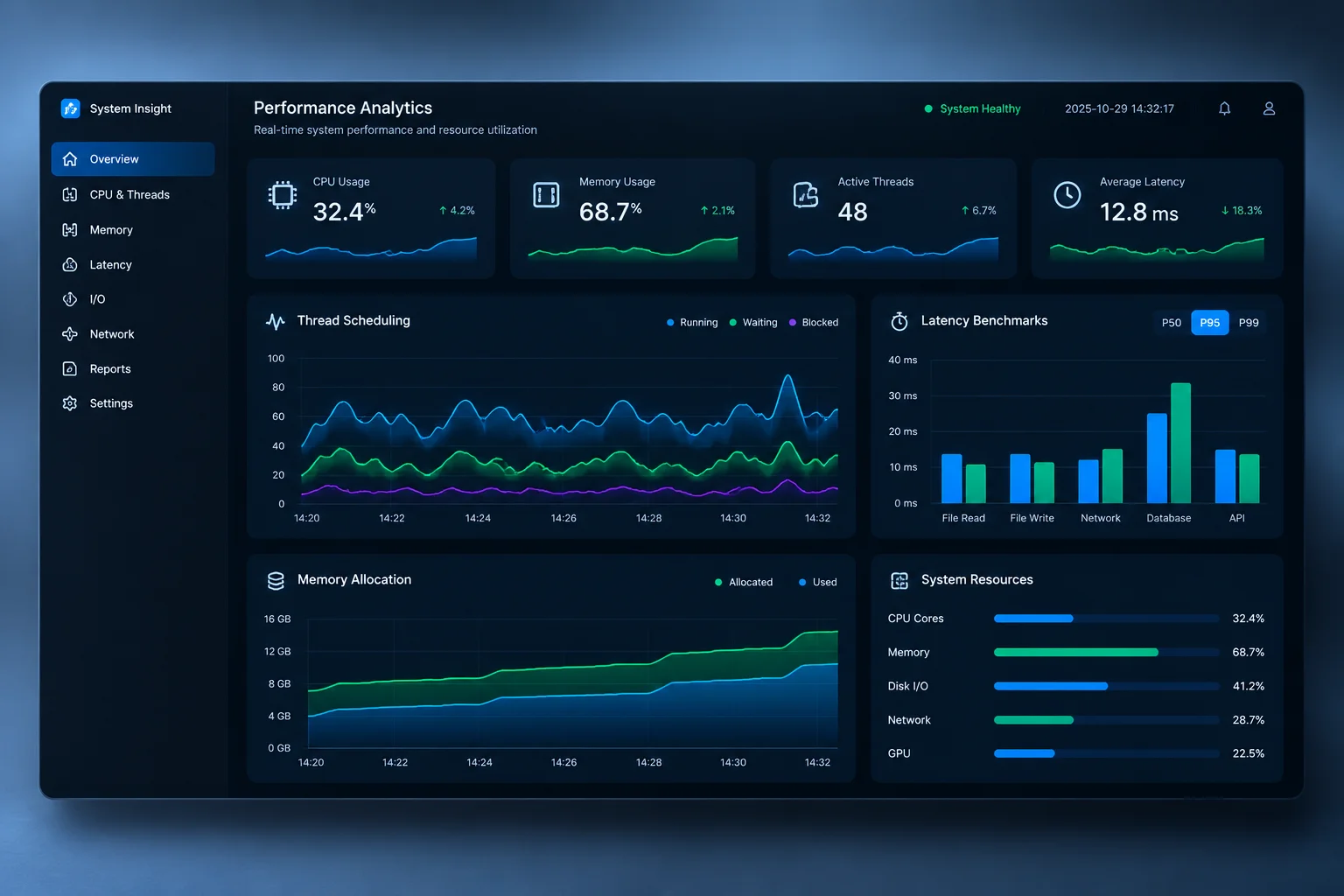
Background Process Control overview display
Process Architecture

Eliminate Unnecessary CPU Drains Safely

Response Time: < 0.4 ms Thread Monitoring: Real-time Memory Reclaim: Up to 38% System Impact: Below 0.2%

Modern operating systems regularly juggle hundreds of background worker threads, telemetries, and pre-launched services. While several services remain indispensable for network integrity and peripheral communications, unmonitored helpers consume excessive processor cycles and fragment system memory without delivering tangible user value.

Cleane-pcc implements a multi-tier process regulator that monitors memory leaks, isolates unessential daemons, and suspends unneeded thread calls during peak computing sessions. The result is consistently low latency across your primary desktop workloads.

Dynamic throttling of unneeded third-party background assistants
Protected exclusions for critical operating system kernel drivers
Automatic resource handover to active foreground rendering engines
Background Process Control configuration diagram
System Efficiency

Ready to unlock peak processor efficiency?

Experience immediate performance gains across productivity suites, game engines, and creative editing software without complicated manual configuration.

Detailed Engineering

How Process Control Functions

Explore the exact technical layers governing background execution, thread safety, and foreground resource prioritization inside Cleane-pcc.

Operating system schedulers manage threads generically based on standard operating rules. Our module intercepts process queues to boost active user windows, immediately demoting non-essential worker threads into efficiency cores or lower scheduling priorities.

Algorithm: Adaptive Quantum Slicing Latency Shift: Instant Priority Downgrade

Background applications often reserve large working sets of physical memory even when sitting idle for days. By trimming inactive working sets and flushing unreferenced cached pointers, memory blocks become available for intensive foreground computations.

Optimization: Working Set Trimming Allocation: Dynamic Page Reclamation

Process throttling must never compromise system stability or crash connected peripherals. An integrated database of verified system components shields critical audio drivers, network stacks, security services, and hypervisors from any unwanted interruption.

Signatures: Over 12,000 Verified Binaries Protection: Kernel-Level Exclusions

Every workflow has unique dependencies. Advanced users can establish custom process profiles that trigger automatically when specific software executes, preventing unwanted sync utilities or secondary browsers from spinning up during demanding sessions.

Customization: Trigger-Based Profiles Action Mode: Automated Sleep / Suspend

Before any process is throttled, the engine builds a live dependency graph so parent services required by active applications are never suspended. This prevents the cascading failures common with blunt task-killing tools.

Graph Depth: Full Dependency Tree Safety: Parent Services Locked

Threads consuming sustained abnormal CPU are detected through rolling telemetry windows and gradually demoted rather than terminated, keeping the host application stable while restoring system responsiveness.

Threshold: 85% Sustained Load Action: Priority Demotion

Chatty daemons repeatedly waking the processor from low-power states are capped to a configurable wake budget, measurably extending battery runtime on laptops without breaking push notifications.

Cap: 12 Wakes per Hour Battery Saving: Up to 18% Longer